Covid Kit
What is covid kit?
The CovidKit app was designed to store a digital version of the user's vaccination records via a Vaccine QR code. It also allows the user to book a Vaccine and/or Testing appointment, provides Covid-19 updates and exposure alerts, via Bluetooth technology, and offers support for users that wish to travel. Stay Safe!
Project Overview
Problem:
As Covid-19 continues to spread across the globe, new directives and regulations are developed to address and cope with the situation. One common regulation is that people must carry their proof of vaccination cards when in public. This is something new and somewhat inconvenient for those who are not using an app. For users who have downloaded an app that carries a virtual copy of their status, they have become frustrated with the efficiency and accuracy. The regulations change as the drastic situation changes. People have to adjust their lives accordingly and most importantly, there wasn't a single app that offered all services needed to support the on-going changes in regulations and living situations.
User Analysis
Several research methodologies were employed to better understand the challenge, user pain points, wish list items and goals.
User Survey
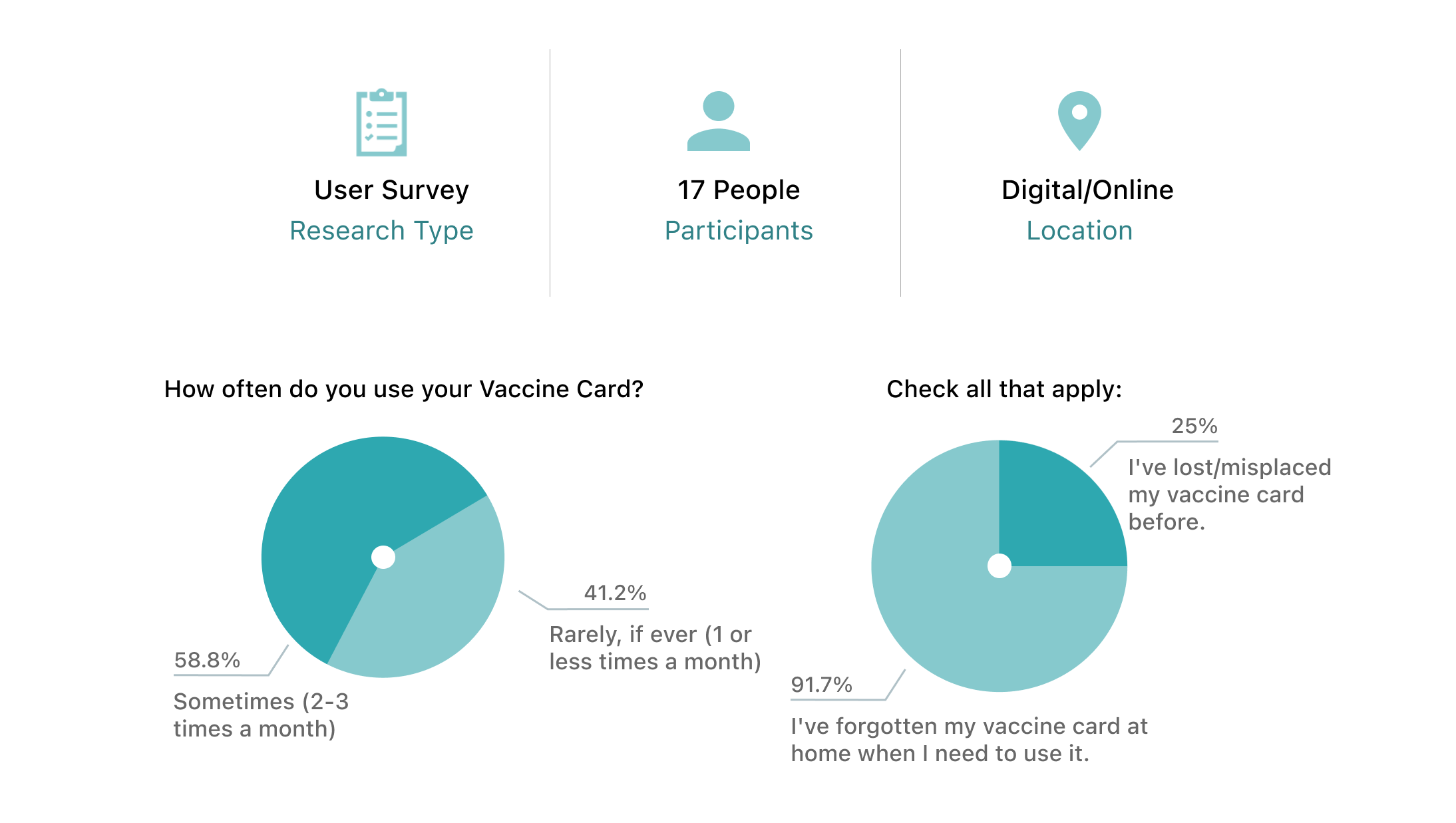
A Covid-19 survey was sent out to the target audience. The goal of the survey was to understand how people are conducting/adjusting their daily lives with this virus.
User Interview
5 User Interviews were conducted to gather information on what user’s pain points and successes.This was done virtually 1-on-1.
The overarching theme from the user interviews was that people would prefer a digitalized Covid-19 vaccination card rather than a piece of paper that they carry everywhere. Even though a location specific app might exist for users, it does not offer an optimal experience, causing more stress than they're willing to put up with.
" I took a picture of my vaccine card because I felt that it was easier to carry around than the actual card itself. "
" When I first registered for it, it was right when they had sort of put it out so that process didn't go very smoothly, like I tried registering for it after 2 week and it would'nt let me. "
" So I was traveling with other people and one person did lose their card, and that was pretty inconvenient because she had to go through the whole process of getting a negative test. She had to rebook her flight and go get a negative test so if you do lose it I can see why it would be such a big hassle. "
Affinity Diagram
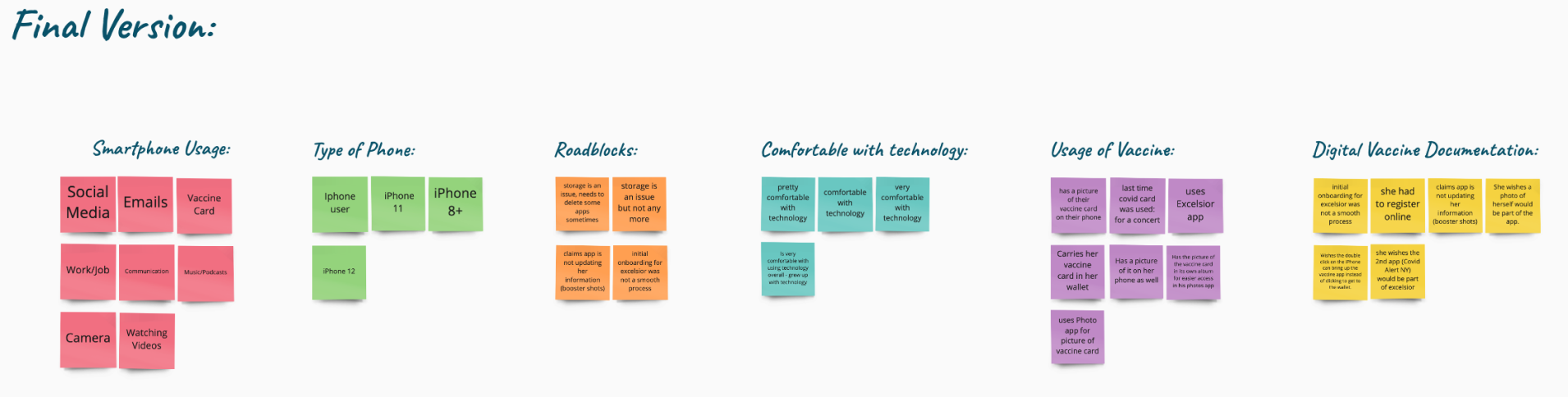
An affinity map was then created to synthesize the data gathered during user interviews. Several themes came up as a result such as Roadblocks, Usage of Vaccine, Smartphone Usage and more shown below.
User Persona
Competitive Analysis
To gain an in-depth understanding of similar products on the market, I did a heuristic analysis of the three indirect competitor apps in order to evaluate features
- Apps serve individual residence of their their respective states/country
- Each app offers only one service and does not consider additional features
- Users claimed to download more than one app due to the lack of features
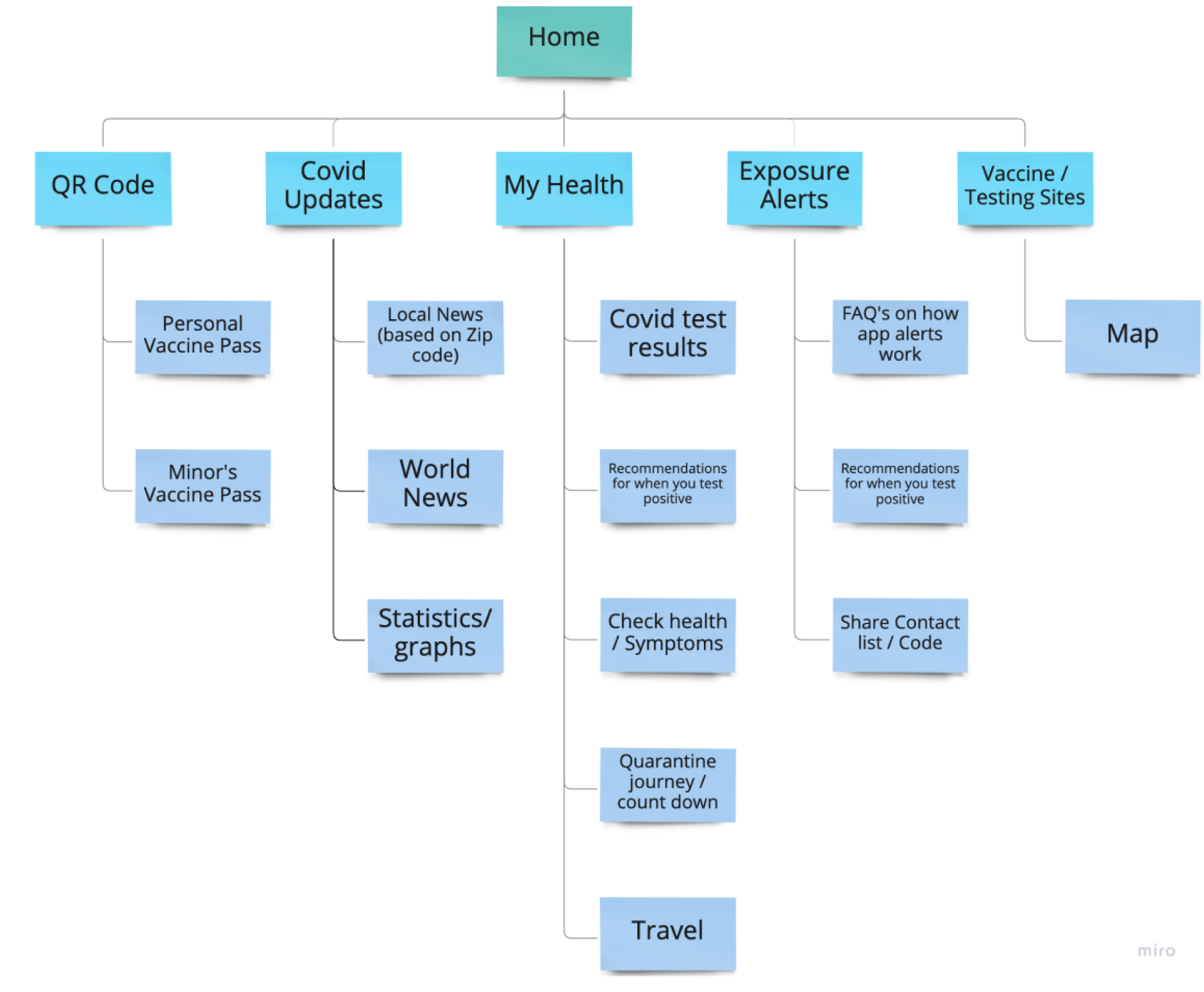
Sitemap
User Flow
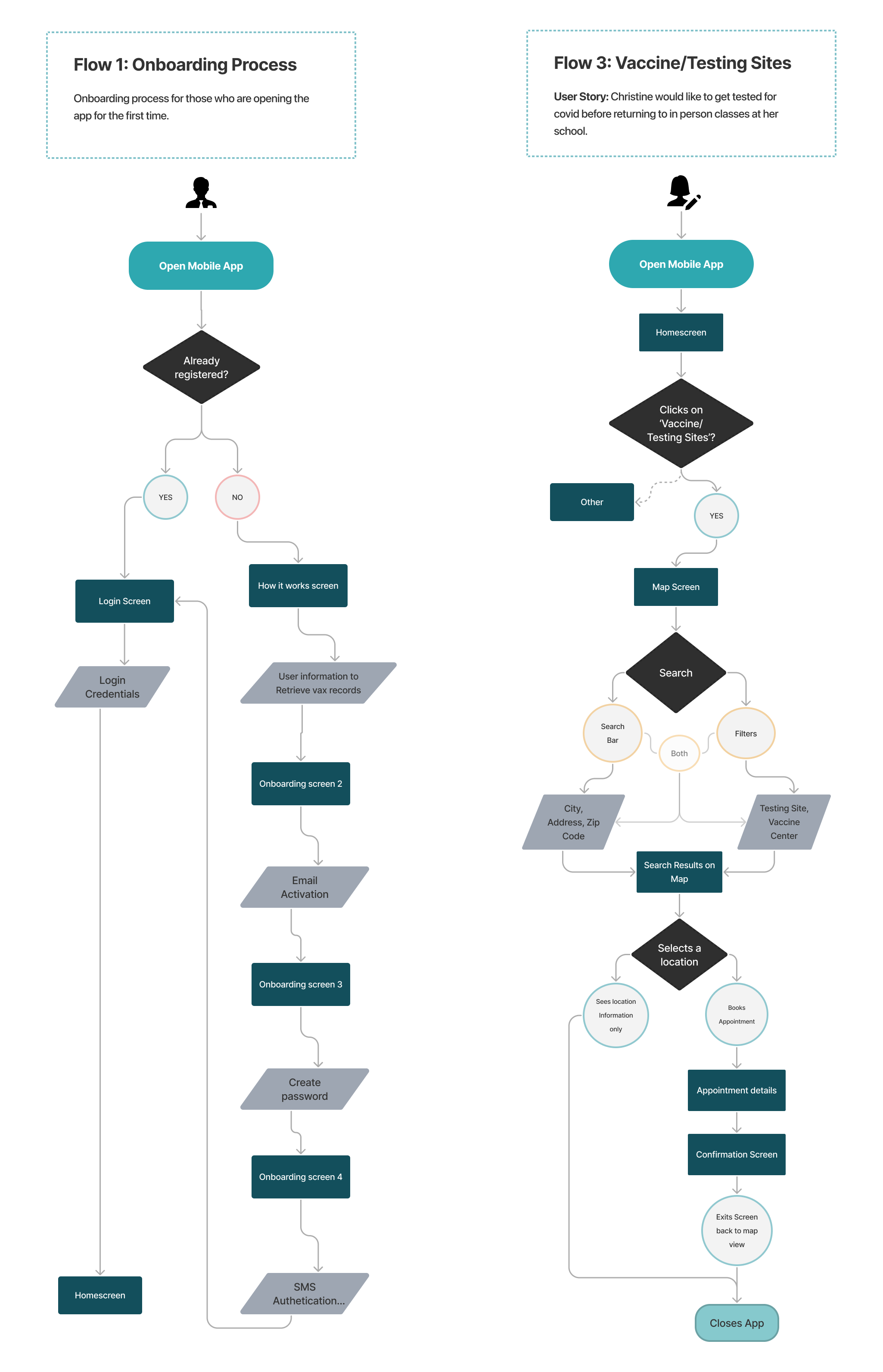
User flows were created to help map out the process of each task that was determined in the sitemap. Here are 2 of the flows:
Sketches
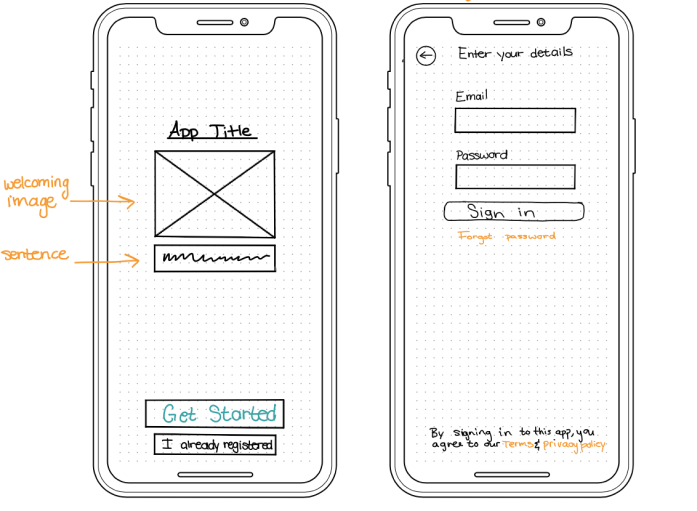
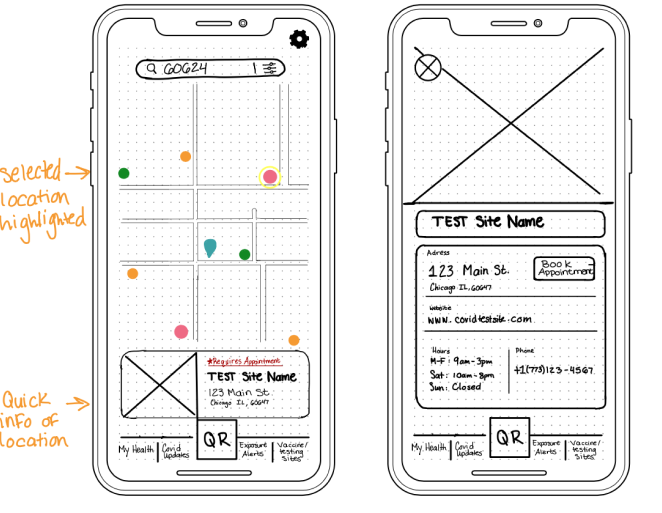
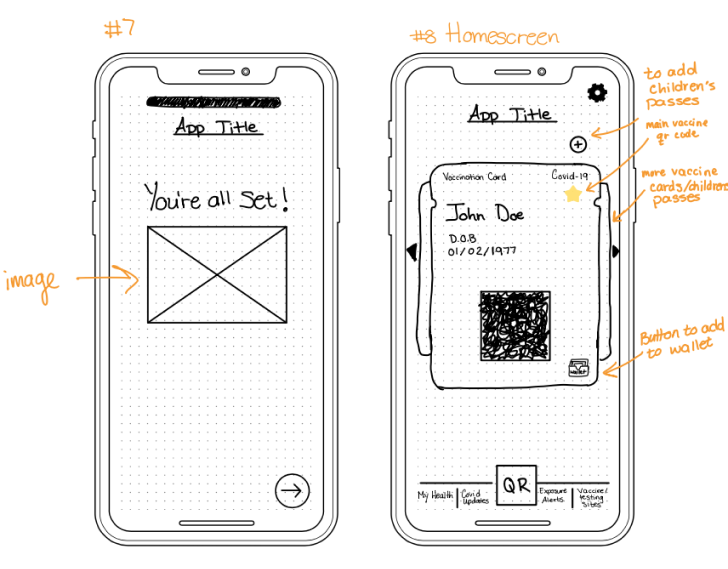
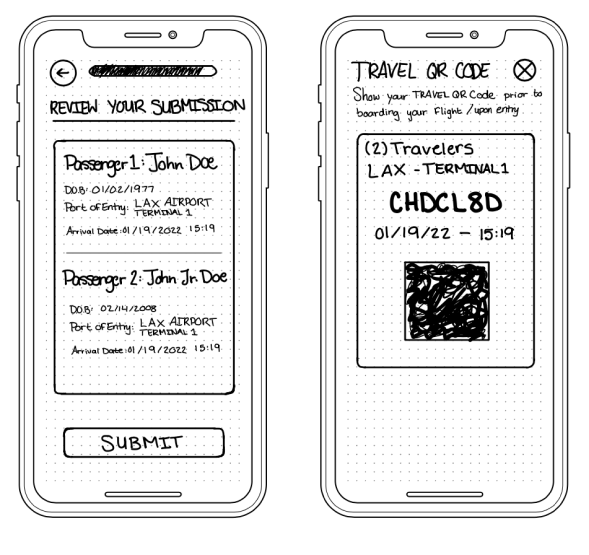
Sketches based on the research and user interviews. Each pair of sketch below represent part of my 4 flows that I was focusing on.
Wireframes
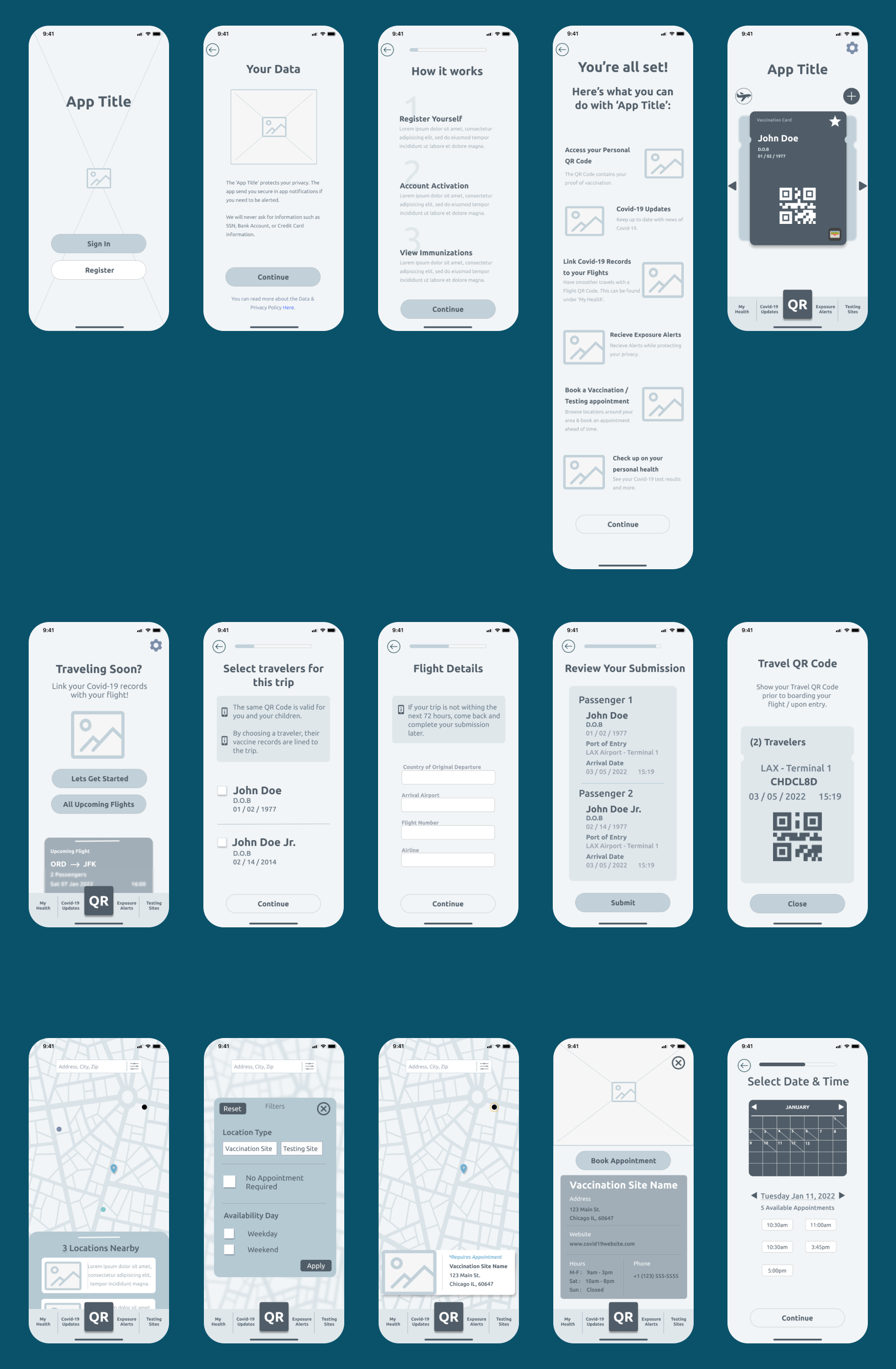
Once user testing was completed for the sketches, the wire-framing process began. Users expressed they would like to have a screen that lets them know of the different features included within the app.
Typography
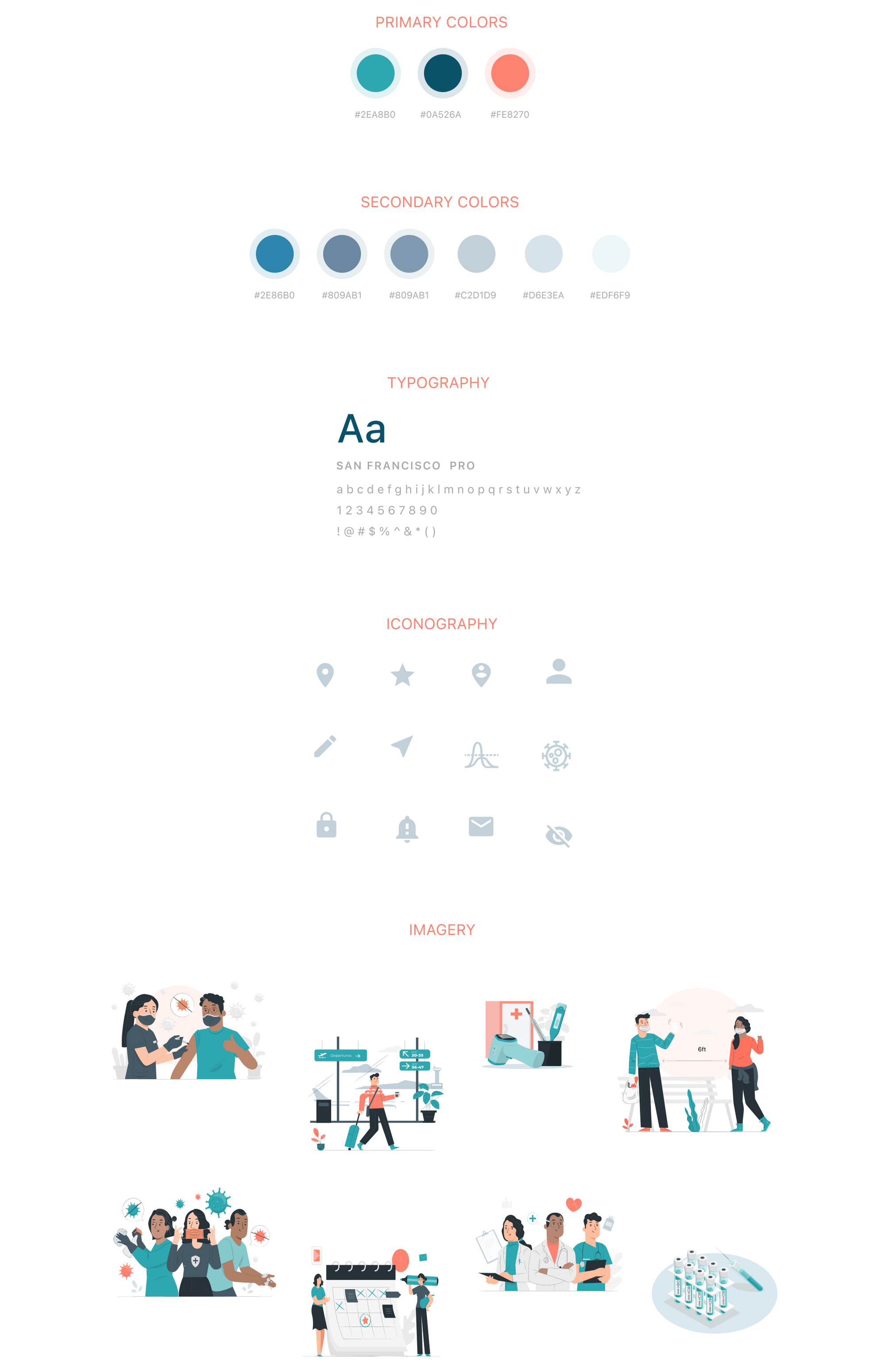
The color palette I created was based on what I wanted the users to feel when using the app. I wanted them to feel safe and comfortable using it by giving a warm and welcoming feel to it.
Usability Studies:
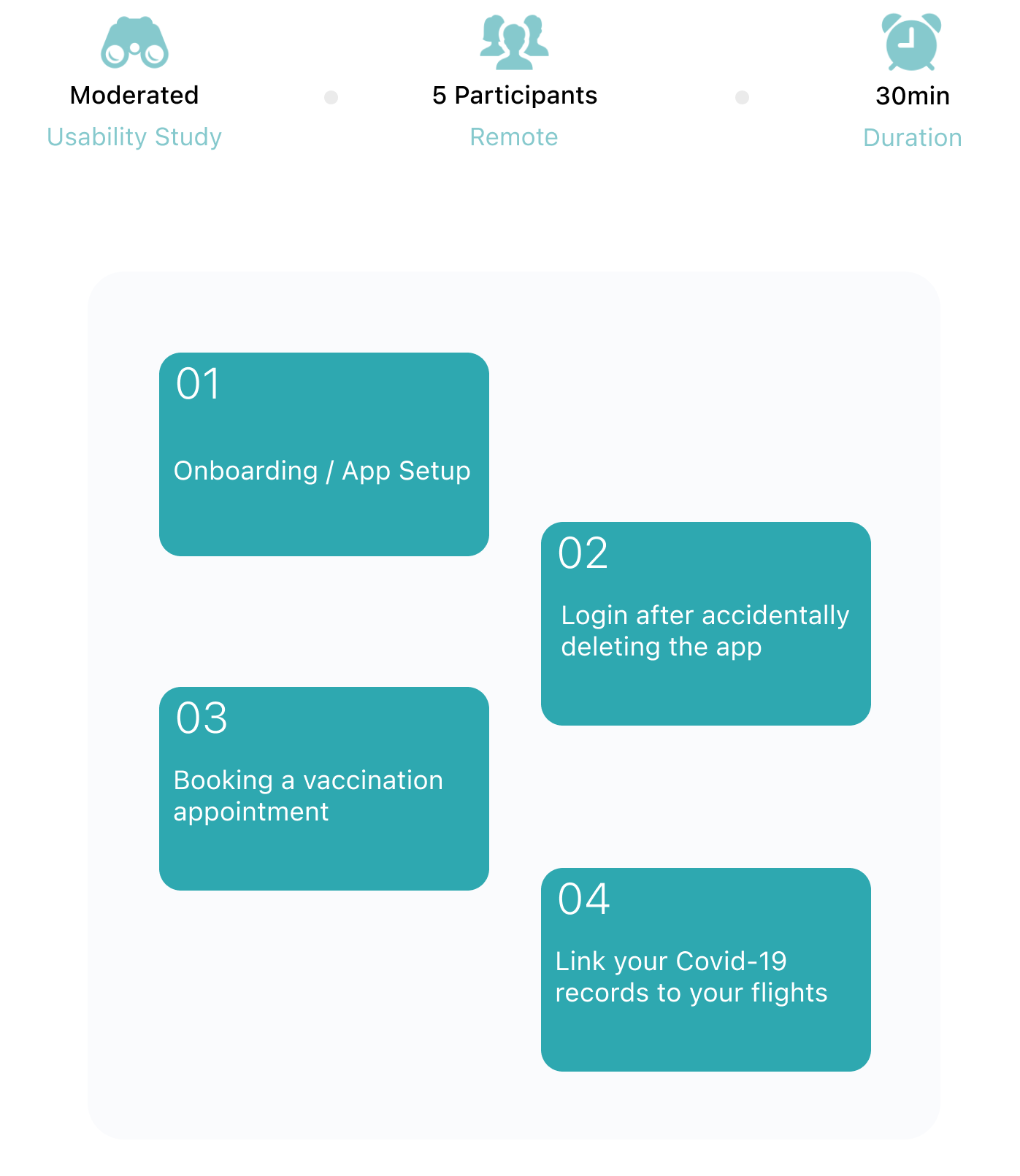
To validate the design, I conducted several rounds of usability testing for each phase of the design (sketches, wireframes, high-fidelity prototype designs). Each usability testing was conducted with 5 participants. After several testing rounds, improvements were made such as rewording labels and making sure there is consistency all around.
Goals:
- Determine if users can complete core tasks
- Assess if CovidKit would be helpful to users and identify any difficulties and problems users might meet during usage.
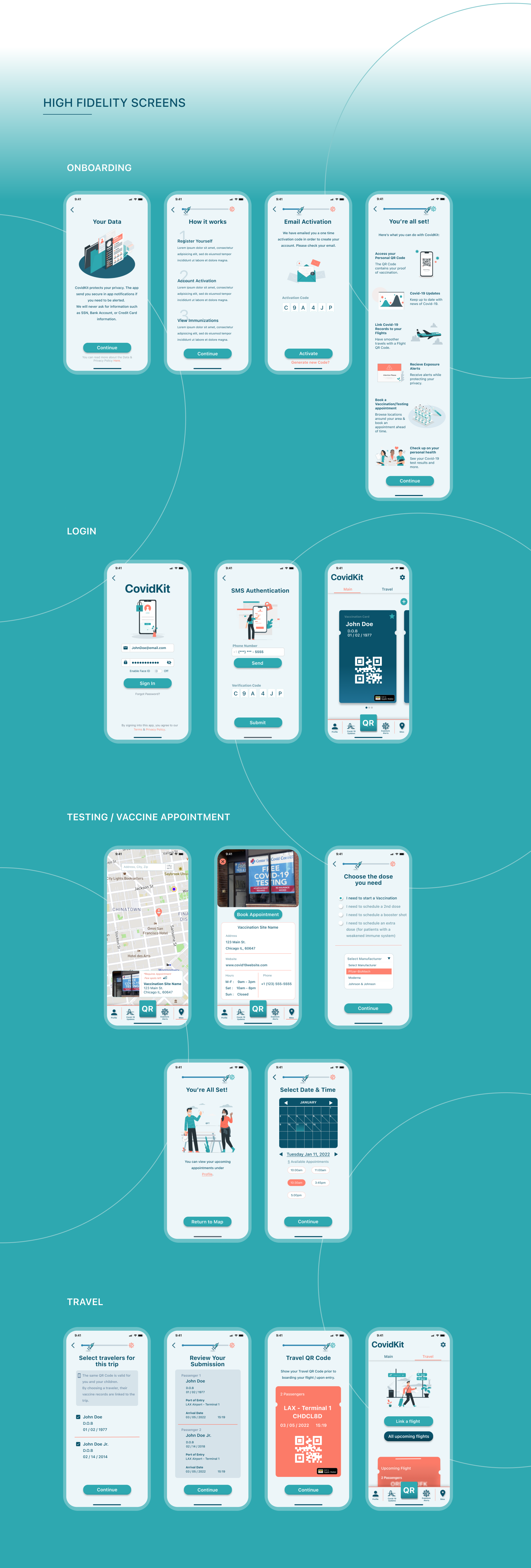
High Fidelity Screens
Refelction
Throughout the process, I didn't expect to grow and learn as much as I have. What began as a single idea evolved into so much more. I couldn’t be happier with how my experience was working on this project. I learned to take more risks on design choices. I learned that user feedback is one of the most important components in decision making. Understanding users and really listening to what they need will make projects run smoothly. While there is still more to learn, for this project’s next steps it would be to continue to add more user routes and design them out along with usability testing to improve on them.
Thank you for taking the time to read my case study!
bookings
Come Say Hi
I’d love to hear from you!
